

Gut-brain connection
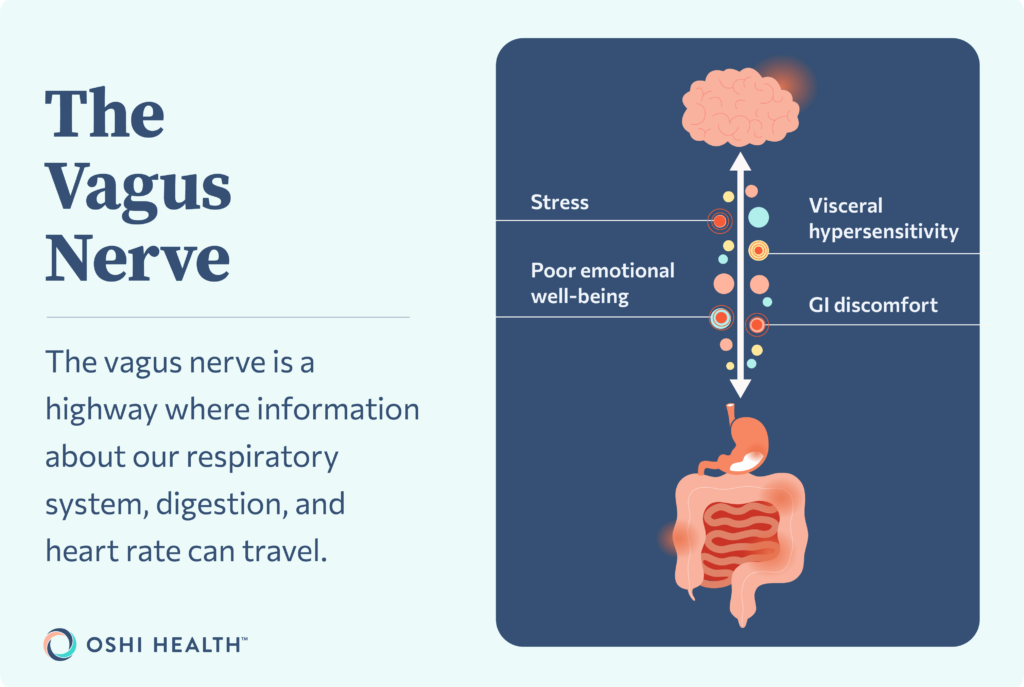
Your gut and your brain are constantly communicating with each other.
They stay connected through a large nerve called the vagus nerve.
You can think of this connection like a two-way street, with messages traveling back and forth between
The vagus nerve connects to a network of nerves inside the wall of the gut called the enteric nervous system.
This system is sometimes called the “second brain.”
Gut-brain connection in GI conditions
For many people with GI disorders, this communication can become disrupted.
It can feel like a traffic jam on the gut–brain highway, where messages between the brain and gut are no longer flowing smoothly.
This can contribute to symptoms such as:
- Pain or discomfort
- Bloating
- Changes in bowel habits
- Increased gut sensitivity
Many different factors can affect the gut–brain connection, including:
- Illness or infection
- Stress
- Trauma
- Disruption to the gut microbiome.
Stress is often a major contributor, and many people with GI conditions are especially sensitive to the effects of stress on the body.
Autonomic nervous system
The Autonomic Nervous System (ANS) is a key player in the Gut-Brain connection.
The autonomic nervous system is the part of your nervous system that controls automatic body functions, such as:
- Breathing
- Heart rate
- Blood pressure
- Digestion
These are things your body does without you having to think about them.
The three parts of the autonomic nervous system
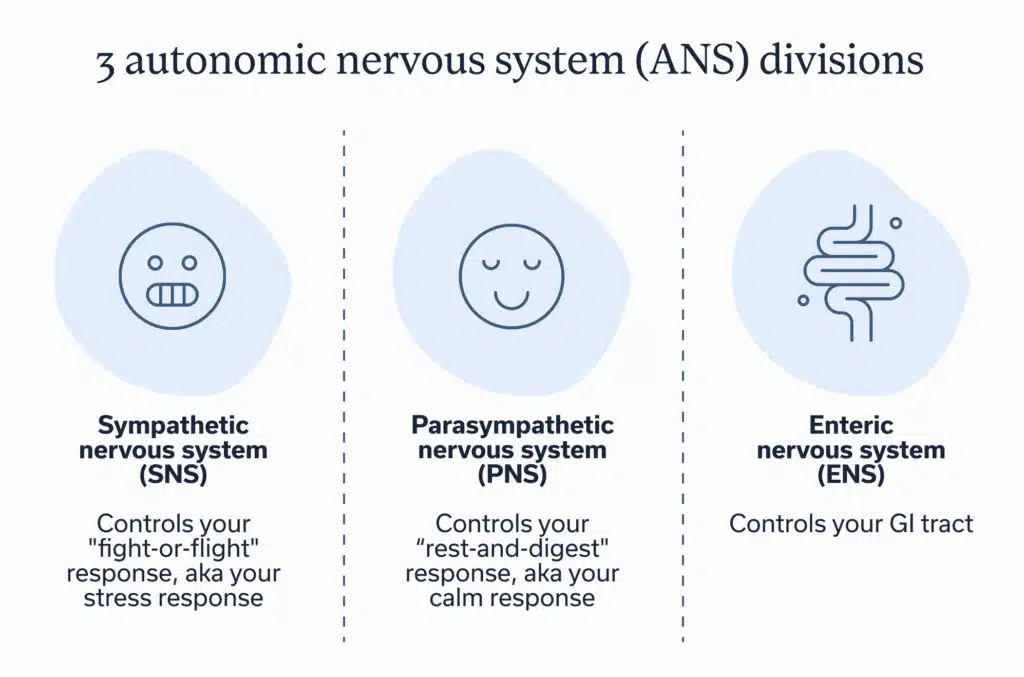
There are three main parts that work together:
- Sympathetic Nervous System
- Parasympathetic Nervous System
- Enteric Nervous System
You can think of it like this:
- The enteric nervous system is the “gut” part of the gut–brain connection
- The sympathetic and parasympathetic systems are the “brain/body control” part
The sympathetic and parasympathetic systems act like opposites, helping your body stay in balance.
The sympathetic nervous system: Fight or flight
The sympathetic nervous system controls your body’s stress response, also known as fight or flight.
When fight or flight turns on, you might feel anxious or stressed, and your body:
- Releases adrenaline
- Tightens muscles
- Increases heart rate and blood pressure
- Releases stress hormones
- Breathes faster and more shallowly
These changes are designed to help you run or fight in an emergency.
When your body thinks survival is the priority, it naturally puts less energy into things that are not urgent, including:
- Digestion
- Immune function
- Reproductive health
During stress states, your body de-prioritizes digestion.
The parasympathetic nervous system: Rest and digest
The parasympathetic nervous system is your body’s calm and safe mode, often called rest and digest.
This system helps signal:
- You are safe
- It is time to slow down
- Digestion can work normally
- Healing and recovery can happen
Balance matters
Both systems are important.
Your body is not going to focus on digestion if it believes you are in danger.
Instead, it saves that energy for survival.
When you feel safe and relaxed, your body can return to supporting digestion and long-term health.
In the past, humans experienced stress in short bursts, followed by long periods of rest.
But modern life can keep our stress response turned on more often, leading to chronic low-level fight or flight.
Why this matters for GI conditions
This is especially important for people with gastrointestinal (GI) disorders.
When the stress response stays activated:
- Digestion slows down
- Gut sensitivity can increase
- The body has a harder time focusing on healing
That’s why learning to support the body’s “rest and digest” system can be an important part of managing GI issues.
GI symptoms can create a stress cycle
For people with GI issues, it’s not just stress in our lives is often the trigger for the fight or flight response. Our GI symptoms can be a major source of stress.
When you have uncomfortable or unpredictable GI symptoms, it can be very stressful.
You may start to worry about things like:
- “What if I have symptoms in public?”
- “What if something is seriously wrong?”
- “What if this never gets better?”
This can lead to a difficult cycle:
- GI symptoms create stress
- Stress activates the nervous system’s fight or flight response
- Fight or flight makes digestion harder
- Symptoms worsen
- Stress increases even more
This is sometimes called the stress-GI distress cycle.

Interrupting the cycle
The good news is that there are tools that can help calm the gut–brain connection.
When you work with your Oshi gut-brain specialist, you will learn skills designed to support this system.
These skills are called Brain–Gut Behavioral Treatments.
They can help you:
- Regulate your autonomic nervous system
- Shift your body toward “rest and digest”
- Reduce the stress response in the gut
- Cope more effectively with GI symptoms
- Support long-term healing and symptom improvement
A personalized plan for your symptoms
Your Oshi provider will work with you to create a plan that is tailored to your specific GI needs and experiences.
The goal is to help you feel more in control of your symptoms and to support your gut and nervous system working together in a healthier way.
Examples of these therapies include: